
Vitamin C Supplement Manufacturer
Easy to dose, hard to make tasty — buffering and overage set from process-specific stability data.
INGREDIENT SPOTLIGHT
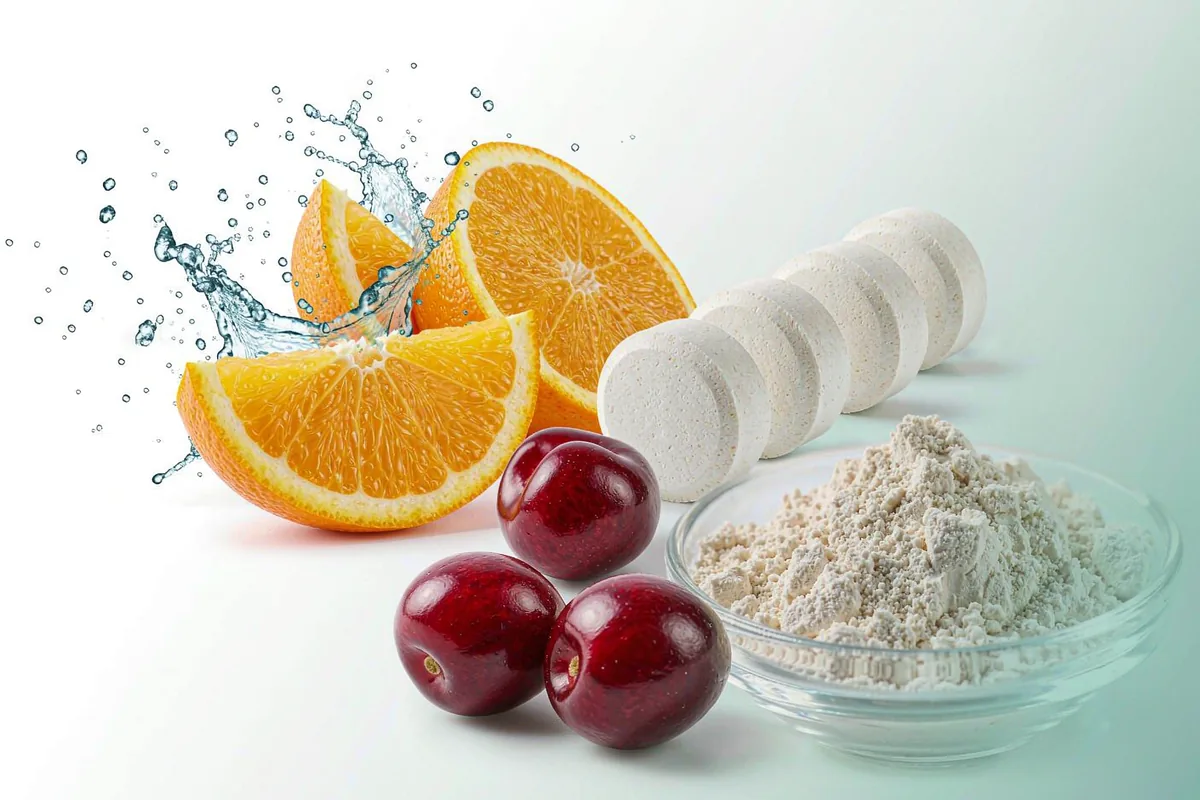
Vitamin C Supplement Manufacturing — Your Formula, Our Line
We manufacture Vitamin C products on our partner lines in Zhengzhou, China. Bring a finished formula, a target active level or a rough concept, and we convert it into a specification we can run in bulk — dose per unit and blend format included.
- High-dose tablets and gummies without a change of tooling
- Tablet, gummy, capsule, powder and effervescent formats
- Natural and synthetic sources both available
Ascorbic acid, sodium ascorbate and slow-release vitamin C where acidity, taste and stability under heat set the entire formulation.
12 Dosage Forms
Gummies, capsules, softgels, tablets, powders, liquids and solid beverages — all run in-house.
6 Production Lines
Two GMP facilities covering 14,000 sqm, 200+ employees, no subcontracted fill.
100+ Export Markets
cGMP, HACCP, ISO 22000 and HALAL certified. Documentation built for your market.
At a Glance
| Item | What We Run |
|---|---|
| Active | Ascorbic acid, sodium ascorbate, calcium ascorbate, ascorbyl palmitate |
| Dose range | 250–2,000 mg per unit, with 1,000 mg the most common retail figure |
| Forms | Crystalline powder, granular, coated, buffered, sustained-release |
| Common formats | Tablet, effervescent, gummy, powder, capsule, liquid, stick pack |
| Typical load | 500–1,000 mg per serving; immune blends add zinc, D and elderberry |
| Key challenge | Acidity and taste, heat degradation, moisture sensitivity, buffering |
| Testing priority | Assay, degradation products, dissolution, moisture, heavy metals, microbiological |
| Documentation | COA with assay and degradation markers, nutrition panel support, claim review |
Why Vitamin C Is Easy to Dose and Hard to Make Tasty
Vitamin C is easy to dose and hard to make tasty. Three decisions decide whether the format delivers.
Taste, Not Chemistry
Vitamin C is cheap and forgiving to dose; the difficulty is elsewhere. Ascorbic acid is sharply acidic, so a 1,000 mg dose tastes sour and can irritate the stomach. Buffering with sodium or calcium ascorbate gentles it — but changes taste, mineral contribution and the label.
Heat & Moisture
Vitamin C degrades under heat and moisture, so it is one of the actives most affected by the process route. An effervescent or gummy processed hot loses measurable potency, showing up at end of shelf life unless the overage is set correctly from data.
Format Demands
A 1,000 mg dose dominates unit weight — in a tablet it leaves little room for excipients; in a gummy it competes with the sugar and gelling system. The format determines how much buffering, how it tastes and how large the unit must be.
Formats We Run
Tablets, including buffered and sustained-release
Effervescent tablets and powders
Gummies, including sugar-free routes
Powders and stick packs for high single doses
Hard capsules and vegetarian capsules
Liquids, drops and immune blends with zinc and elderberry
What We Check Before Release
Assay is run on the finished unit rather than the incoming powder
Assay is run on the finished unit rather than the incoming powder, because the process route — particularly heat in gummies and effervescents — is where vitamin C loss occurs.
Degradation markers are measured alongsi…
Degradation markers are measured alongside the assay so the COA reflects the state of the finished product and not merely its label figure at release.
Taste is checked against a retained reference where the product is buffered
Taste is checked against a retained reference where the product is buffered, since the balance between acidity and mineral taste is the whole consumer experience of the format.
Moisture is held inside a window
Moisture is held inside a window, because vitamin C degrades faster in the presence of water and the pack choice determines how much moisture the product sees over its shelf life.
Sourcing and Specification Notes
Buffering with sodium or calcium ascorbate changes taste
Buffering with sodium or calcium ascorbate changes taste, mineral contribution and label position — decide it before the panel is drafted, not after.
Heat-sensitive formats such as gummies and effervescents lose measurable potency
Heat-sensitive formats such as gummies and effervescents lose measurable potency, so the overage should be set from process-specific stability data. A 1,000 mg dose dominates the unit weight, which limits how small a tablet or gummy can be and how much flavour the format can carry.
Sustained-release and buffered versions carry different claims and different label requirements in most markets
Sustained-release and buffered versions carry different claims and different label requirements in most markets, so the claim set should follow the format choice. Immune blends pair vitamin C with zinc, vitamin D and elderberry; the interaction between those actives is a formulation task, not a list of ingredients.
Packaging that excludes moisture and light materially extends shelf life, and should be chosen at specification stage rather than at artwork.
One Thing Buyers Get Wrong
The most common mistake is treating buffering as a marketing… The most common mistake is treating buffering as a marketing adjective rather than a formulation decision. A brand that asks for buffered vitamin C without specifying whether it wants sodium ascorbate, calcium ascorbate or a blend is leaving the taste, the mineral content and part of the label to the supplier. The three behave differently in the mouth and contribute differently to the nutrition panel, and reversing the choice after the artwork is signed means new artwork. We name the buffer in the specification and sample the taste before the panel is drafted.
Popular Formulas We Run
Vitamin C is a volume immune staple — the delivery tech and the zinc pairing set the tier.
Immune Pair
Vitamin C 500 mg with zinc for a classic immune-season capsule or gummy.
Liposomal Premium
Liposomal vitamin C at 250 mg for a higher-absorption premium line.
Beauty + C
Vitamin C with collagen and biotin for a skin-positioned formula.
MOQ, Sampling & Lead Times
The commercial basics up front — minimums, sampling and production speed, the same commitment on every ingredient line.
Minimum Order Quantities
From 100 pieces per SKU on standard formats; 500 for custom packaging, 1,000 for a custom formula and 3,000 for full turnkey projects.
Quote & Sampling
Enquiries answered within 24 hours and quotations within 48. Samples take 2-3 days, with pilot batches from 1–5 kg before any bulk commitment.
Production & Dispatch
Standard bulk runs complete in 5–10 days, with packaged goods leaving the factory in 10–15 days after PO and artwork approval.
Where to Go Next
Health Focus

Frequently Asked Questions
What is the minimum order quantity for vitamin C products?
MOQ is confirmed per format and specification at quotation stage. Dose, format, buffering and packaging all move the figure — send us your target and we will quote exactly.
Should I use ascorbic acid or a buffered form?
Ascorbic acid is the most economical and the most acidic; sodium and calcium ascorbate are gentler on the stomach and taste less sharp but contribute minerals to the panel. The right choice depends on your dose, your format and your positioning.
Do you make sugar-free vitamin C gummies?
Yes. Polyol-based systems are available, and they behave differently from sugar in texture and in how they protect the active, so we sample the finished gummy rather than assuming equivalence.
How do you stop the vitamin C degrading during manufacture?
By choosing a process route suited to the active, holding moisture inside a window and setting the overage from measured stability data under your actual pack rather than applying a blanket percentage.
Can you make effervescent vitamin C?
Yes. Effervescents are a demanding format because moisture control is critical, but they carry high single doses well and suit immune and hydration positions.
How long does bulk production take?
We reply to enquiries within 24 hours and send a quotation within 48. Samples take 2-3 days, and standard bulk runs complete in 5–10 days with packaged goods leaving in 10–15 days.
DOSAGE FORMS
Which format should your Vitamin C product take?
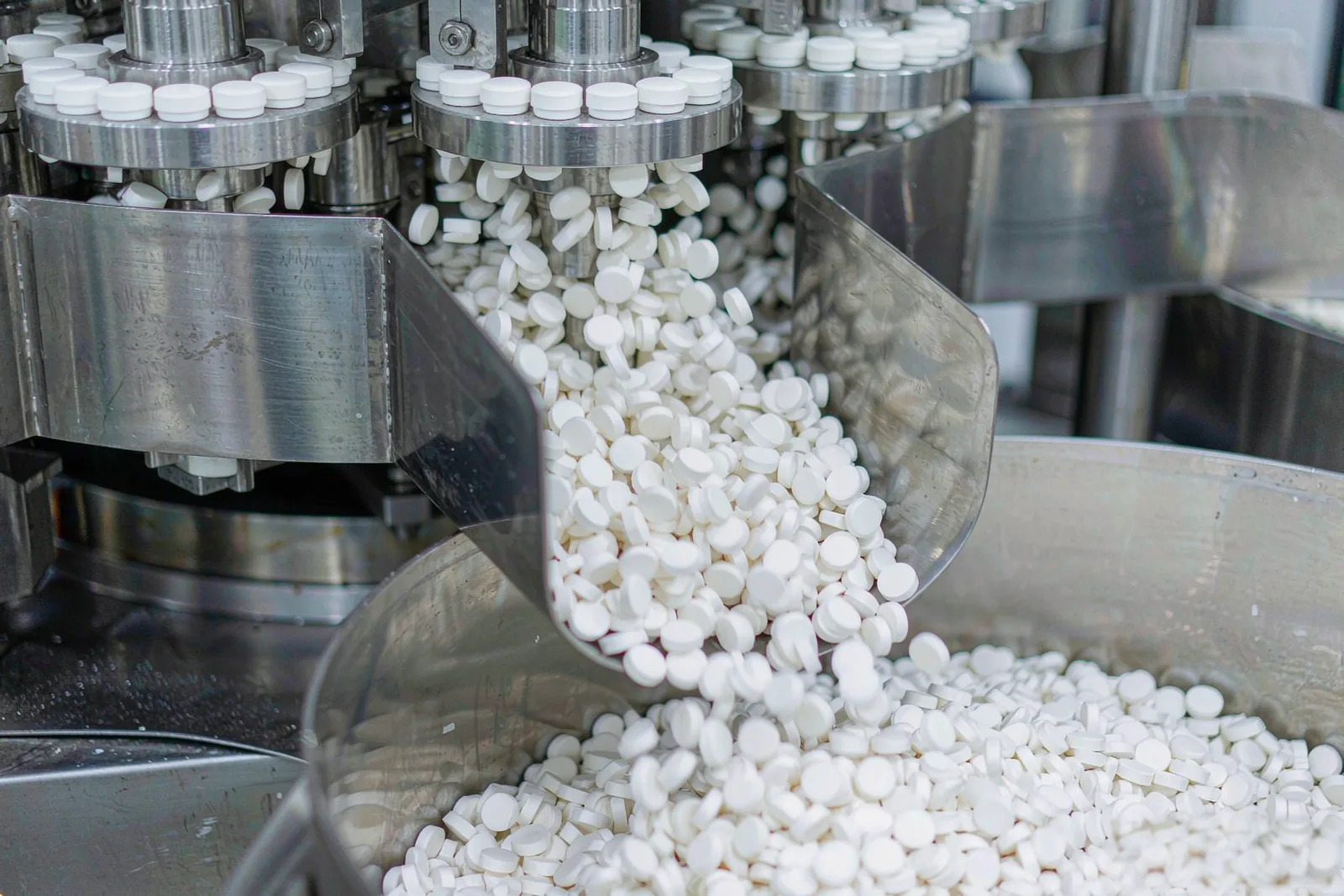
The same Vitamin C blend can be delivered in several forms, and each one changes the fill weight, the taste profile and the tooling. We produce tablet, gummy and powder in-house, so the choice is driven by your market rather than by what a third party can supply.
- Forms we run for this ingredient: tablets, gummies and powders
- Pilot batch from 1–5 kg before any bulk commitment
- Fill weight, unit count and pack format set to your brief
Request a Vitamin C Sample
Send the target actives, dosage form and pack size. We reply with a feasibility view, a sample plan and indicative pricing within 1–2 business days.
Start Your Project
Send the format, target active load and destination market. We confirm feasibility, quote it and prepare a sample — usually within 1–2 business days. Prefer to see the capability first? Read how our OEM programmes run, or request a free quote.