
Omega-3 Supplement Manufacturer
EPA/DHA with oxidation control as the primary spec — TOTOX, delivery form and packaging fixed together.
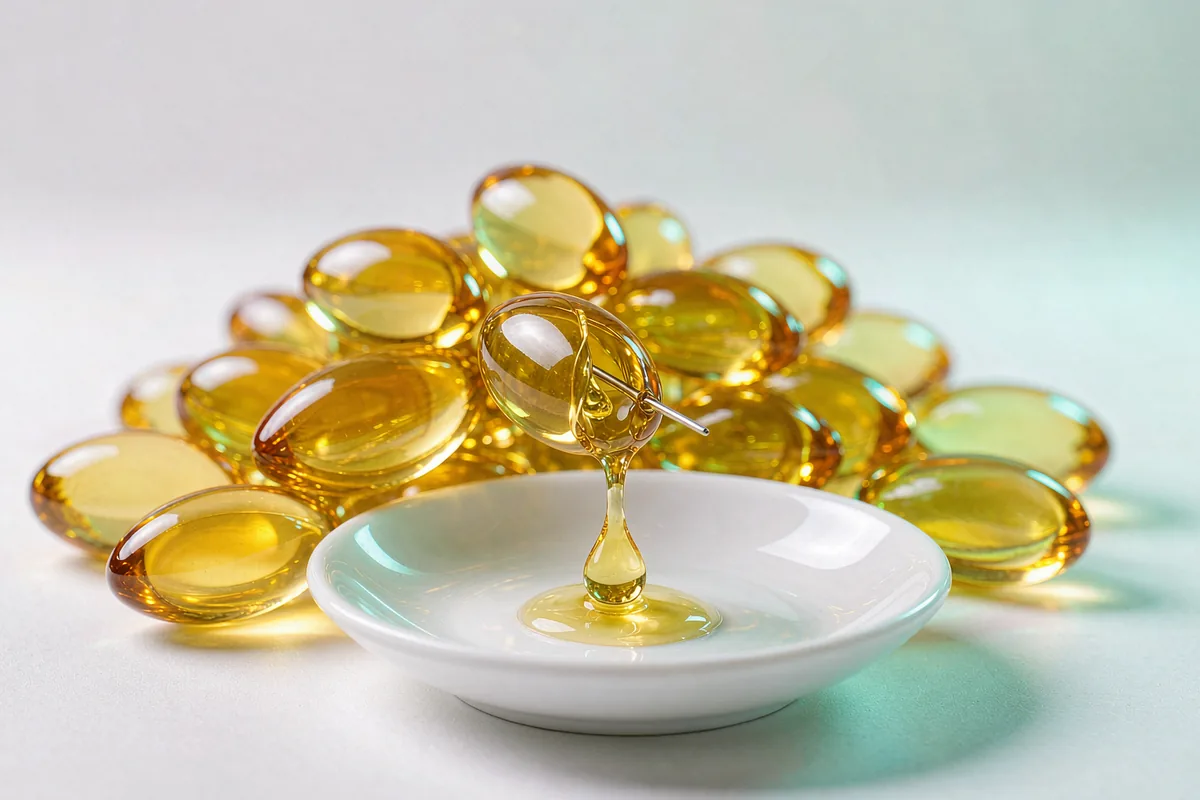
INGREDIENT SPOTLIGHT
Omega-3 Supplement Manufacturing — Your Formula, Our Line
We manufacture Omega-3 products on our partner lines in Zhengzhou, China. Bring a finished formula, a target active level or a rough concept, and we convert it into a specification we can run in bulk — EPA/DHA ratio and oil specification included.
- EPA and DHA ratios set to your formula, with the oil spec agreed in writing
- Softgel, liquid and emulsion formats
- Light-protective and oxidation-controlled packaging
Fish, algal and krill omega-3 where EPA and DHA ratios, oxidation control and the smell of the finished capsule are the specification.
12 Dosage Forms
Gummies, capsules, softgels, tablets, powders, liquids and solid beverages — all run in-house.
6 Production Lines
Two GMP facilities covering 14,000 sqm, 200+ employees, no subcontracted fill.
100+ Export Markets
cGMP, HACCP, ISO 22000 and HALAL certified. Documentation built for your market.
At a Glance
| Item | What We Run |
|---|---|
| Active | Fish oil, algal oil, krill oil, concentrated EPA/DHA ethyl esters |
| EPA/DHA range | 180–1,000 mg combined per unit, ratios set to the brief |
| Forms | Triglyceride (TG) and ethyl ester (EE) concentrates, natural oils |
| Common formats | Softgel, liquid, emulsion, gummy, powder blend |
| Typical load | 500–1,500 mg oil per softgel; 1,000–2,000 mg per daily serving |
| Key challenge | Oxidation control, rancidity and odour, enteric release, heavy-metal testing |
| Testing priority | EPA/DHA assay, peroxide and anisidine value, TOTOX, heavy metals, PCBs |
| Documentation | COA with fatty-acid profile and oxidation figures, fish allergen statement, source declaration |
Why Oxidation Is the Real Omega-3 Specification
Omega-3 is an oil, and oils oxidise. Three decisions decide whether the capsule is still good at month eighteen.
Oxidation Is the Spec
Peroxide value, anisidine value and TOTOX describe how far an oil has already oxidised — the numbers that separate a product still good at expiry from one that smells of fish on opening. We treat oxidation control as the primary specification, not an afterthought.
Delivery Form
A softgel protects oil from oxygen and light better than a liquid or emulsion; enteric coating shifts release past the stomach for reflux-sensitive consumers. These interact — a concentrated oil behaves differently in a shell than natural triglyceride oil, and coating changes the shell again.
Documentation
Fish oil is marine, and buyers increasingly ask for species, fishery and oxidation figures as a package. We test the fatty-acid profile and oxidation markers on the finished line and report both, so your quality team sees the same picture you do.
Formats We Run
Softgels in 500 mg to 1,500 mg oil loads
Liquid fish oil and emulsified formats
Gummies with microencapsulated omega-3
Powder blends for functional foods
Enteric-coated softgels for reflux-sensitive consumers
Algal and krill variants for vegan and premium positions
What We Check Before Release
The fatty-acid profile is assayed to confirm the EPA and DHA figures on the label
The fatty-acid profile is assayed to confirm the EPA and DHA figures on the label, because the ratio in the incoming oil is not the ratio in the finished product once concentrations and blends are applied.
Oxidation is measured as peroxide value
Oxidation is measured as peroxide value, anisidine value and TOTOX, and the figures are compared against the limits agreed at specification stage. A batch that passes on assay but fails on TOTOX is a batch that will fail in the market.
Odour and taste are checked against a retained reference
Odour and taste are checked against a retained reference, because rancidity is perceived before it is measured. The sensory check is what the consumer experiences and the analytical figures are what your quality team audits.
Heavy metals and contaminants are tested against the destination market’s limits
Heavy metals and contaminants are tested against the destination market’s limits, since marine ingredients carry different regulatory expectations in different regions and the documentation has to match the claim.
Sourcing and Specification Notes
Concentrated EPA/DHA raises cost sharply above natural oil
Concentrated EPA/DHA raises cost sharply above natural oil, so the declared ratio should be settled against the price positioning rather than the other way round.
Enteric coating adds cost and lead time …
Enteric coating adds cost and lead time but is often the difference between a repeat purchase and a returned bottle for reflux-sensitive customers. Triglyceride and ethyl-ester forms behave differently in the shell and in the body; the choice should be named in the specification, not left to the supplier.
Sourcing documentation is part of the specification for many buyers — species
Sourcing documentation is part of the specification for many buyers — species, fishery and sustainability statements are requested at quotation stage, not at shipment. Flavour masking in gummies and liquids is a real technical task, not a marketing choice, and it is best scoped with a sample before the range is committed.
Dark, sealed packaging materially extends shelf life and should be chosen at specification stage rather than as a late artwork decision.
One Thing Buyers Get Wrong
The most common mistake is specifying omega-3 by the headlin… The most common mistake is specifying omega-3 by the headline EPA+DHA figure alone. Two products can both declare 1,000 mg and behave completely differently, because the oxidation state, the delivery form and the packaging determine whether the oil is still acceptable at month eighteen. A brief that names one number leaves the outcome to the supplier’s default, and the default is almost always the cheapest route that passes assay. We ask for the delivery form, the packaging and the shelf-life target alongside the dose, and we fix all four in the specification before quoting.
Popular Formulas We Run
Omega-3 is judged on EPA and DHA, not oil weight — the ratio sets the positioning.
Daily Fish Oil
1,000 mg fish oil with 300 mg combined EPA and DHA per softgel.
High-Potency EPA
Concentrated EPA-dominant oil for a cardiovascular-positioned softgel.
Omega + D3K2
Omega-3 with vitamin D3 and K2 for a heart-and-bone stack.
MOQ, Sampling & Lead Times
The commercial basics up front — minimums, sampling and production speed, the same commitment on every ingredient line.
Minimum Order Quantities
From 100 pieces per SKU on standard formats; 500 for custom packaging, 1,000 for a custom formula and 3,000 for full turnkey projects.
Quote & Sampling
Enquiries answered within 24 hours and quotations within 48. Samples take 2-3 days, with pilot batches from 1–5 kg before any bulk commitment.
Production & Dispatch
Standard bulk runs complete in 5–10 days, with packaged goods leaving the factory in 10–15 days after PO and artwork approval.
Where to Go Next
Health Focus

Frequently Asked Questions
What is the minimum order quantity for omega-3 softgels?
MOQ is confirmed per format and specification at quotation stage. Oil concentration, softgel size, coating and packaging all move the figure — send us your target and we will quote exactly.
Can you supply vegan omega-3?
Yes. Algal oil delivers DHA and EPA without a marine source, and it behaves differently in the shell and in flavour terms, so we sample it rather than assuming equivalence with fish oil.
Do you test for oxidation?
Yes. Peroxide value, anisidine value and TOTOX are measured against limits agreed at specification stage, and the figures are reported on the COA alongside the fatty-acid profile.
Can you make enteric-coated softgels?
Yes, where the customer needs to avoid the fishy aftertaste or the reflux that uncoated oil can cause. The coating changes the shell formulation and adds lead time, so it is decided at specification stage.
How long does bulk production take?
We reply to enquiries within 24 hours and send a quotation within 48. Samples take 2-3 days, and standard bulk runs complete in 5–10 days with packaged goods leaving in 10–15 days.
Which omega-3 source should I choose?
It depends on your positioning and your price point. Fish oil is the most cost-effective at scale, algal oil supports a vegan claim, and krill sits at the premium end. Tell us the position you are building and we will recommend a route.
DOSAGE FORMS
Which format should your Omega-3 product take?
The same Omega-3 blend can be delivered in several forms, and each one changes the fill weight, the taste profile and the tooling. We produce softgel and liquid in-house, so the choice is driven by your market rather than by what a third party can supply.
- Forms we run for this ingredient: softgels, liquids and gummies
- Pilot batch from 1–5 kg before any bulk commitment
- Fill weight, unit count and pack format set to your brief
Request a Omega-3 Sample
Send the target actives, dosage form and pack size. We reply with a feasibility view, a sample plan and indicative pricing within 1–2 business days.
Start Your Project
Send the format, target active load and destination market. We confirm feasibility, quote it and prepare a sample — usually within 1–2 business days. Prefer to see the capability first? Read how our OEM programmes run, or request a free quote.