Tablet
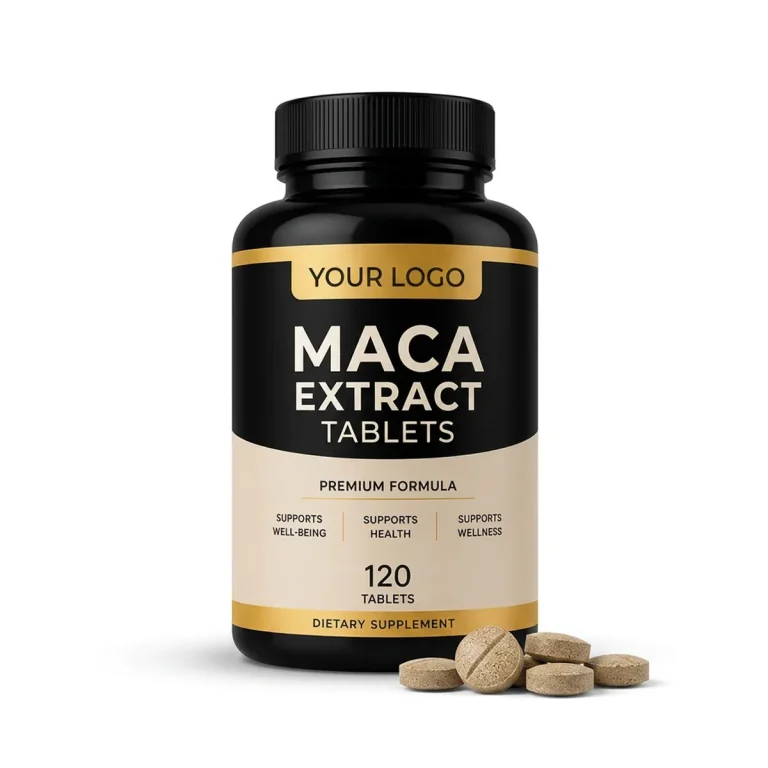
Maca Tablets
Why brands choose our maca root tablets Maca root is a popular adaptogenic botanical for energy and daily vitality lines, with strong…
Request a Quote
Why brands choose our maca root tablets Maca root is a popular adaptogenic botanical for energy and daily vitality lines, with strong…
Request a Quote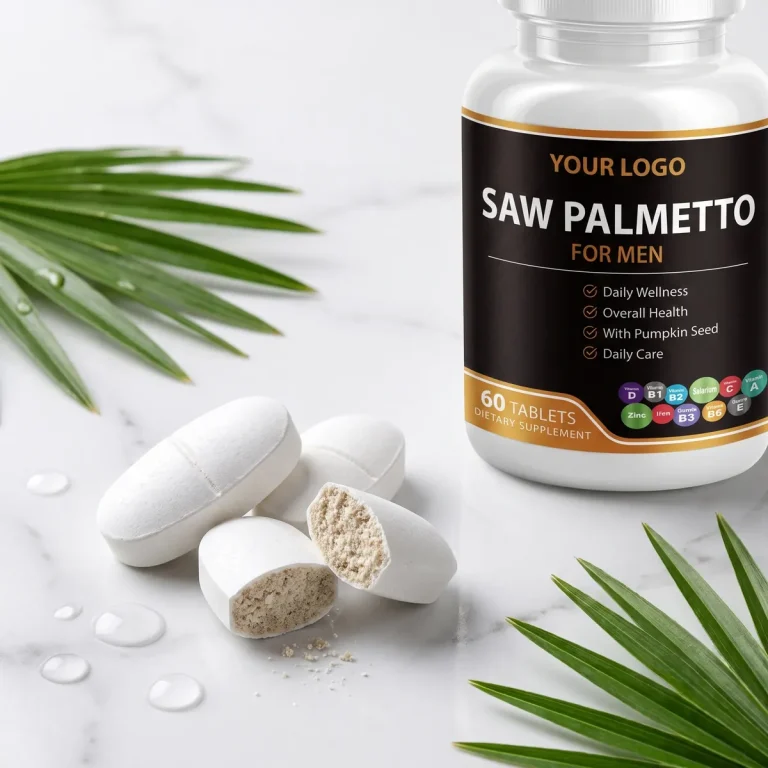
Why brands choose our saw palmetto tablets Saw palmetto is a well-established botanical for men’s daily wellness lines, widely recognised by European…
Request a Quote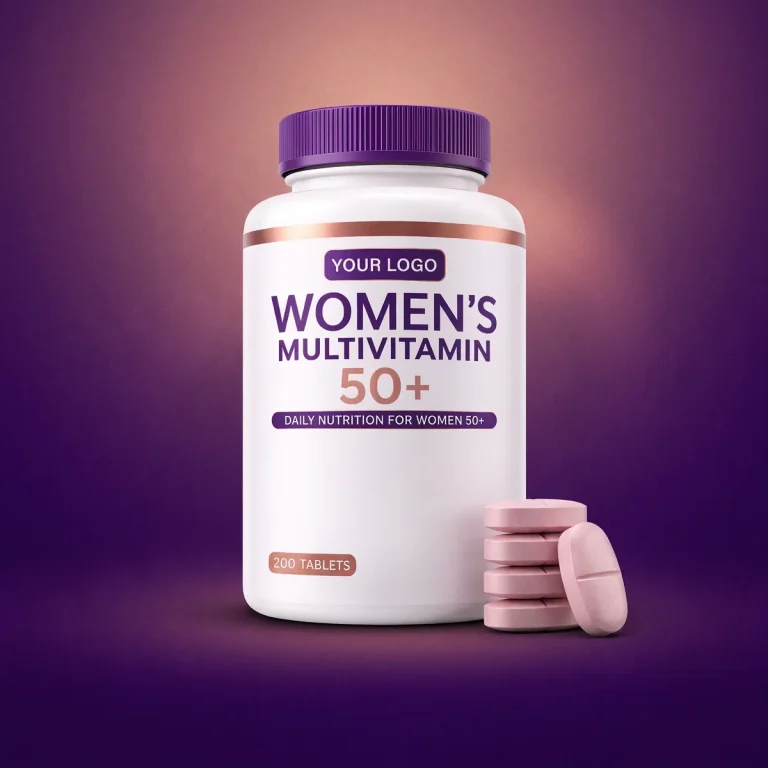
Why brands choose our multivitamin formulas A multivitamin is the highest-volume category in daily supplementation, offering brands a reliable foundation product with…
Request a QuoteTablets remain the most cost-effective high-volume supplement format — the highest active loading per unit, the longest shelf life and the simplest logistics. Hubogen compresses and coats tablets in-house, from chewable and effervescent to film-coated and sustained-release. As a tablet manufacturer, Hubogen offers custom tablet OEM from chewable to film-coated and sustained-release.
Tablet weights typically range from 250 mg to 1,500 mg, in round, oval, oblong or caplet shapes. We offer uncoated, film-coated and sugar-coated finishes, plus chewable, effervescent, dispersible and sustained-release variants. Hardness, disintegration time and coating weight are tuned to your market.
Multivitamin and multimineral tablets, vitamin C and zinc, calcium and magnesium, iron and folic acid, glucosamine and chondroitin, herbal extracts such as ginseng and ginkgo, weight-management and sports-nutrition formulas, and buffered or effervescent vitamin C.
Tablets are released against hardness, disintegration and uniformity — checked on the finished unit, not just the bulk blend. Heat-sensitive actives are processed at a temperature set against the ingredient. Shelf life is stated on the spec sheet and confirmed against stability data; most failures are moisture or oxygen ingress through the pack, not the product.