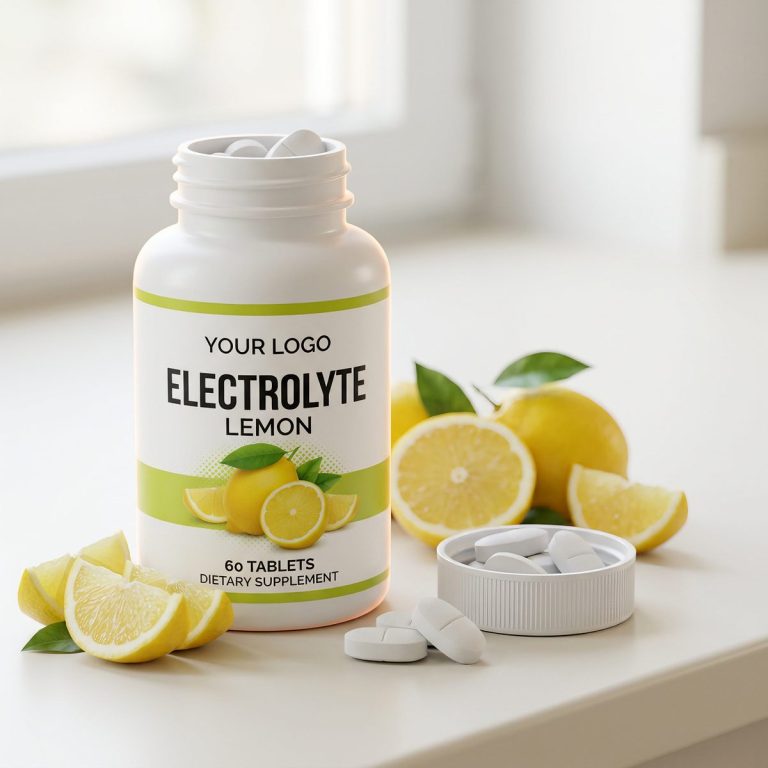
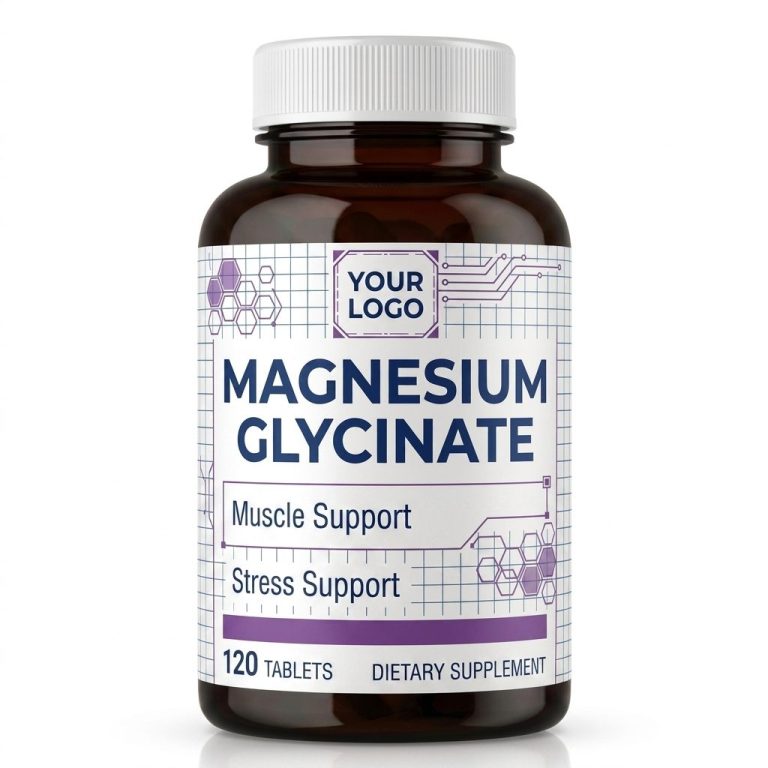
Tablets remain the most cost-effective high-volume supplement format — the highest active loading per unit, the longest shelf life and the simplest logistics. Hubogen compresses and coats tablets in-house, from chewable and effervescent to film-coated and sustained-release. As a tablet manufacturer, Hubogen offers custom tablet OEM from chewable to film-coated and sustained-release.
Why brands choose tablets
- Lowest cost per dose — the most economical format for large-volume programmes.
- High active loading — pack a multi-ingredient formula into one unit.
- Long shelf life — low moisture and a compressed matrix give excellent stability.
- Coating options — film, sugar, enteric and sustained-release.
- Chewable and dispersible variants for those who dislike swallowing pills.
Format at a glance
- Weight — 250 mg to 1,500 mg typical.
- Shapes — round, oval, oblong and caplet.
- Coatings — uncoated, film, sugar, enteric or sustained-release.
- Variants — chewable, effervescent, dispersible.
- Packaging — bottles, blister packs or strip packs.
Specification range
Tablet weights typically range from 250 mg to 1,500 mg, in round, oval, oblong or caplet shapes. We offer uncoated, film-coated and sugar-coated finishes, plus chewable, effervescent, dispersible and sustained-release variants. Hardness, disintegration time and coating weight are tuned to your market.
Typical applications
Multivitamin and multimineral tablets, vitamin C and zinc, calcium and magnesium, iron and folic acid, glucosamine and chondroitin, herbal extracts such as ginseng and ginkgo, weight-management and sports-nutrition formulas, and buffered or effervescent vitamin C.
What decides whether a project runs smoothly
- Compression vs disintegration — pressing harder gives a robust tablet that dissolves slower; decide the priority early.
- Direct compression or granulation — granulation costs more but handles higher doses and poorer-flowing blends.
- Coating — for taste, odour, colour or release; a coated tablet is a different specification.
- Brittleness in transit — a tablet that survives the press can still chip in a bottle on a long route.
- Score lines — a scored tablet must split evenly, constraining shape and thickness.
Sourcing and specification notes
- Compression pressure and heat affect sensitive actives — probiotics lose potency under tableting conditions.
- Tablet size is a physical ceiling on dose and swallowability.
- Coating decisions are made at specification stage because they change the core formulation.
- Blend uniformity is the leading cause of assay variation, especially for low-dose actives.
- Multi-layer and bi-layer tablets are possible where two actives need to be separated.
Quality and shelf life
Tablets are released against hardness, disintegration and uniformity — checked on the finished unit, not just the bulk blend. Heat-sensitive actives are processed at a temperature set against the ingredient. Shelf life is stated on the spec sheet and confirmed against stability data; most failures are moisture or oxygen ingress through the pack, not the product.